Intestinal Inflammation Models
PepT1-mediated uptake of KPV was followed by lower intestinal inflammation scores in DSS- and TNBS-induced colitis models.

Inflammation Pathway Studies
Free Shipping on orders over $200
Scan the QR code on any vial to verify its batch, COA, and origin in seconds. Secure traceability from our lab to your bench.
KPV is a three amino acid peptide: lysine, proline, and valine. It is the tail end of a larger hormone called alpha-MSH. That tail carries the anti-inflammatory part of the sequence but not the part that affects skin color. Studies have measured its effect on NF-kB, a signaling pathway involved in inflammation. Its small size lets it enter cells through routes that larger peptides cannot use.
α-MSH-derived tripeptide (α-MSH 11–13)
The pathways KPV acts on — and what each one does. The animation traces its signal outward from the compound to every target it engages.
At nanomolar concentrations, lower NF-κB and MAP-kinase pathway activation is measured in vitro. NF-κB is a principal regulator of inflammatory gene expression, and reduced secretion of TNF-α, IL-6 and IL-1β is recorded alongside.
Research shows KPV is taken up by cells via the PepT1 di/tripeptide transporter, which is expressed on immune cells and intestinal epithelial cells. This transporter-mediated uptake allows KPV to act intracellularly on inflammatory signaling.
KPV is the C-terminal tripeptide of alpha-melanocyte-stimulating hormone (α-MSH 11–13). Most of α-MSH's anti-inflammatory activity has been attributed to this fragment, which also shows antimicrobial activity in vitro.
The main areas KPV is being studied for — and the study-reported figures behind them.
PepT1-mediated uptake of KPV was followed by lower intestinal inflammation scores in DSS- and TNBS-induced colitis models.
KPV is studied as the C-terminal tripeptide that carries much of α-MSH's anti-inflammatory and immunomodulating activity.
In a rabbit corneal model, topical KPV produced complete re-epithelialization by 60 hours, with a mechanism that may involve nitric-oxide signaling.
KPV shows antimicrobial effects against Staphylococcus aureus and Candida albicans across a broad concentration range in published research.
An interactive 3D model rendered from the compound record — rotate and explore its structure.
C16H31N5O4
| Chemical Name | KPV (Lys-Pro-Val) |
| Sequence | L-Lysyl-L-Prolyl-L-Valine (α-MSH 11–13) |
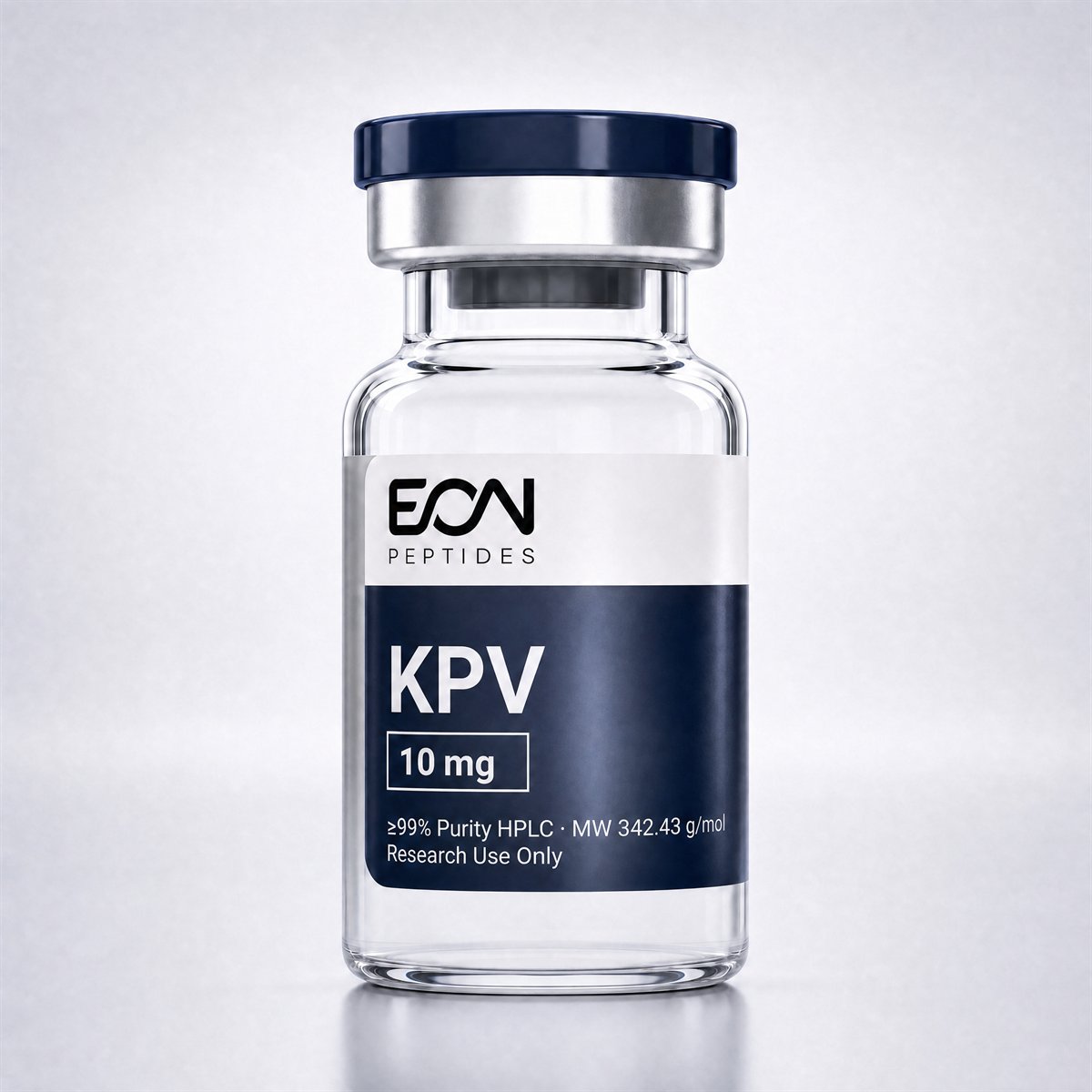
| Molecular Weight | 342.43 g/mol |
| Molecular Formula | C₁₆H₃₁N₅O₄ |
| Content | 10 mg per vial |
| Form | Lyophilized powder |
| Purity | ≥99% (HPLC verified) |
| Testing | Third-party HPLC, Mass Spec, Endotoxin |
| Storage | -20°C for long-term stability |
| Solubility | Water-soluble |
| COA | Included with every order |
KPV is a tripeptide composed of lysine, proline and valine. It is the C-terminal fragment of alpha-melanocyte-stimulating hormone (α-MSH 11–13), and much of α-MSH's anti-inflammatory and immunomodulating activity has been attributed to this fragment.
At nanomolar concentrations, KPV inhibits the NF-κB and MAP-kinase inflammatory signaling pathways. NF-κB is a master regulator of inflammatory gene expression, so suppressing it lowers production of pro-inflammatory cytokines such as TNF-α, IL-6 and IL-1β in research models.
PepT1 is a di/tripeptide transporter expressed on immune cells and intestinal epithelial cells. Research shows KPV enters cells through PepT1, which allows it to act intracellularly on inflammatory signaling — a mechanism considered central to its effects in intestinal-inflammation models.
In DSS- and TNBS-induced mouse colitis models, PepT1-mediated uptake of KPV was followed by lower intestinal inflammation scores and reduced expression of pro-inflammatory cytokines including IL-1β, IL-6, IL-12, TNF-α and IFN-γ.
No. Despite roughly two decades of preclinical research across multiple organ systems, KPV has not completed human clinical trials. Research-grade KPV sold here is intended strictly for in vitro laboratory research and is not for human or veterinary use.
Lyophilized KPV should be stored at -20°C, protected from light and moisture, to preserve peptide integrity.
Not for human or veterinary use. For in-vitro laboratory research only. These statements have not been evaluated by the FDA; this product is not intended to diagnose, treat, cure, or prevent any disease. Sold exclusively to qualified researchers and institutions.